
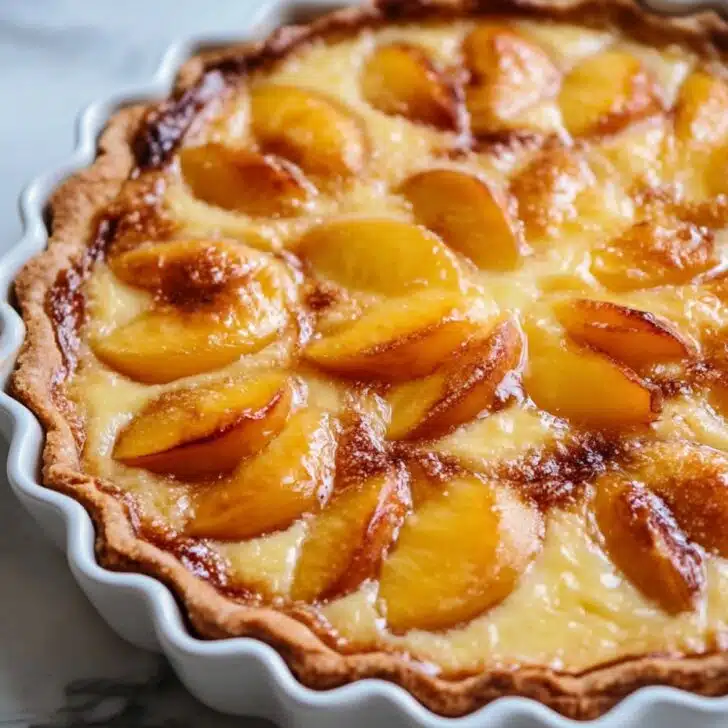
Catching Up Over Pie: My Love Affair with Peach Custard
So here’s the deal—I’ve loved peaches probably since I was knee-high to a grasshopper (okay, that's a bit dramatic, but true). The first time I made this Peach Custard Pie, it was a sticky August day, and I was trying to impress an aunt who genuinely believes store-bought pastry is a cardinal sin. Actually, the first attempt was...a little messy. My pie looked more like a weird soup with peach slices stuck in it. But, honestly, everyone went in for seconds (my cousin took thirds and left me with crumbs and a half-smile). So let’s just say: this one has history for me, and I hope it’ll make memories for you too.

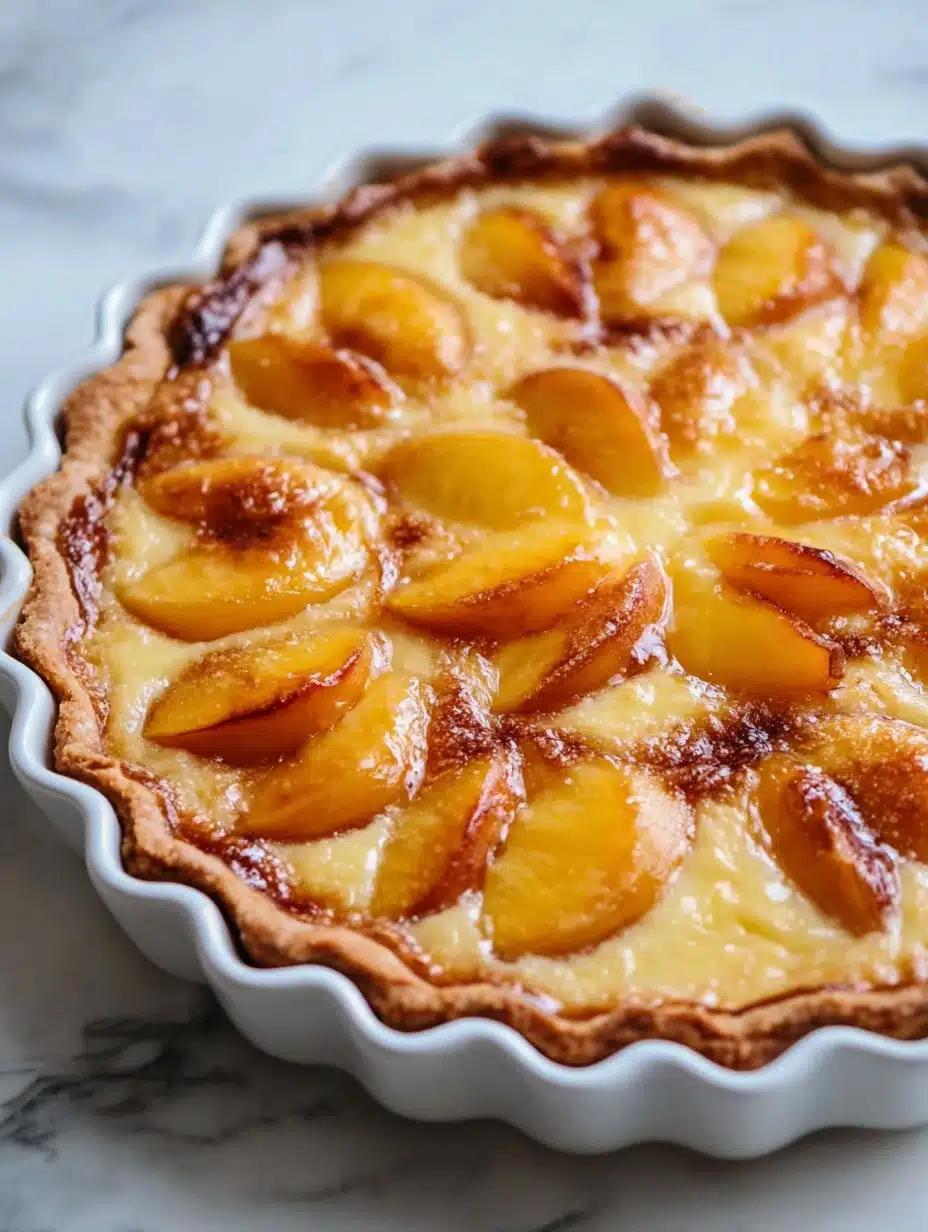
Why You'll Love This Pie (Or At Least, Why We Do)
I make this when the peaches start shouting at me from the fruit bowl. My family goes a bit nutty for it—it’s got that creamy, custardy middle that tastes like sunshine and lazy afternoons. Plus, I used to dread the fancy-pants custard pies that looked more intimidating than they tasted; this one is super forgiving. Even if your peaches are a bit bruised (happens), it still comes together. There’s something about warm pie for breakfast that feels just right, you know?
What You'll Need: My Not-So-Strict Ingredient List
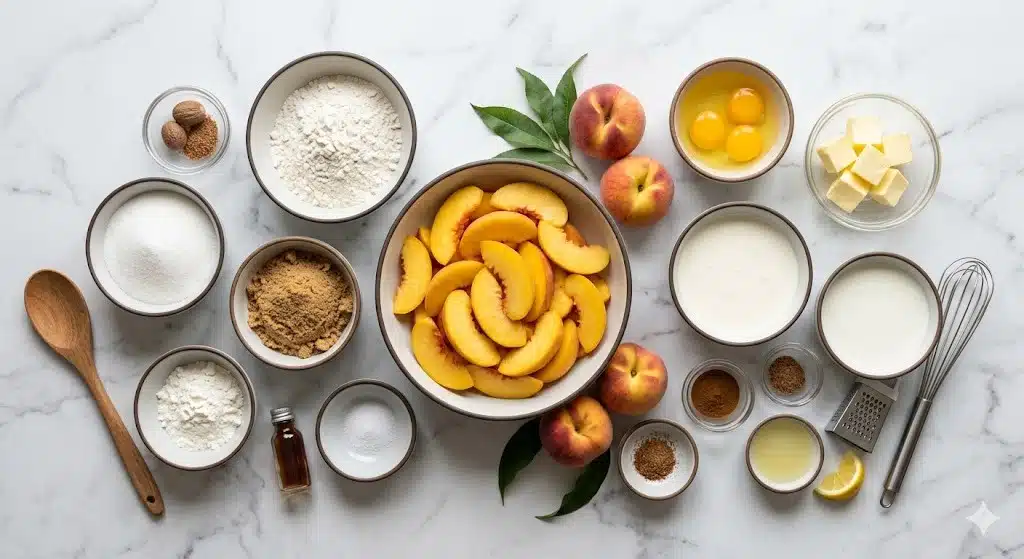
- 1 unbaked 9-inch pie crust (store-bought is fine honestly, though my grandmother always insisted on that red box crust mix—I use whatever’s handy)
- 4-5 ripe peaches, peeled and sliced (or about 4 cups—canned works great out of season, just drain well!)
- 3 large eggs
- ¾ cup granulated sugar (I swap in brown sugar sometimes for a bit of depth)
- 1 cup whole milk (I’ve even used half-and-half when I overestimated my milk supply)
- ¼ cup heavy cream (skip if you want a lighter custard, just add a splash more milk)
- 2 teaspoons vanilla extract (I ran out once and used almond—weird but not bad!)
- ¼ teaspoon salt
- 2 tablespoons all-purpose flour (or cornstarch, if you can’t find the flour—by the way, self-raising flour is a no-go… trust me)
- ½ teaspoon ground nutmeg (my personal favorite) or cinnamon (go wild if you prefer)
How the Magic Happens: Directions (With the Good, the Bad, and the Slightly Messy)
- Preheat your oven to 375°F (190°C). If your oven preheats with that dramatic whoosh sound, it’s working. Place the pie crust in your pie plate, crimp the edges if you’re feeling artsy, or just leave it rustic (nobody's judging here).
- Layer those peach slices into the crust. I sometimes overlap them or chuck them in willy-nilly; just try to cover the bottom mostly evenly.
- In a medium bowl, whisk the eggs with the sugar. You want it kind of frothy. Add the milk, cream, vanilla, salt, flour, and nutmeg—whisk again until smooth. (This is where I usually taste-test the custard, though maybe you're more disciplined.)
- Pour the custard mix right over the peaches. It'll look a bit thin, but don’t worry. That’s normal. Tap the pie plate lightly on the counter so the custard settles and mingles with the peach slices.
- Pop it in the oven and bake for about 45-55 minutes. Keep an eye toward the end—it should be golden with a gentle jiggle in the center. If the edges start to brown too soon, tent some foil ring-style around just the crust (this step can feel fiddly, I know).
- Remove and cool at least an hour before slicing. Or don’t—sometimes we dig in while it’s still warm. But just know, it’ll be runny if you do. Your call!

Things I’ve Learned (Sometimes the Hard Way)
- Letting it cool properly really does help the custard set. I’ve prematurely cut more than one slice into a puddle—still tastes fab, a little trickier to serve.
- If your peaches aren’t super sweet, you might want to bump up the sugar a smidge. But don’t go too wild—that custard can get tooth-achingly sweet, fast.
- If your pie crust puffs or slides a bit, oh well! It’s still pie.
What Else Works (Or Sometimes, Doesn't!)
- Swapped in nectarines once when the store was out of peaches. Pretty good! The skin’s a bit tougher but in a pinch, you won’t mind.
- Tried with coconut milk instead of dairy in a burst of inspiration—not my favorite. Maybe I just did it wrong.
- Once tried sprinkling the top with coarse sugar before baking; it gave the best little crunchy bits.

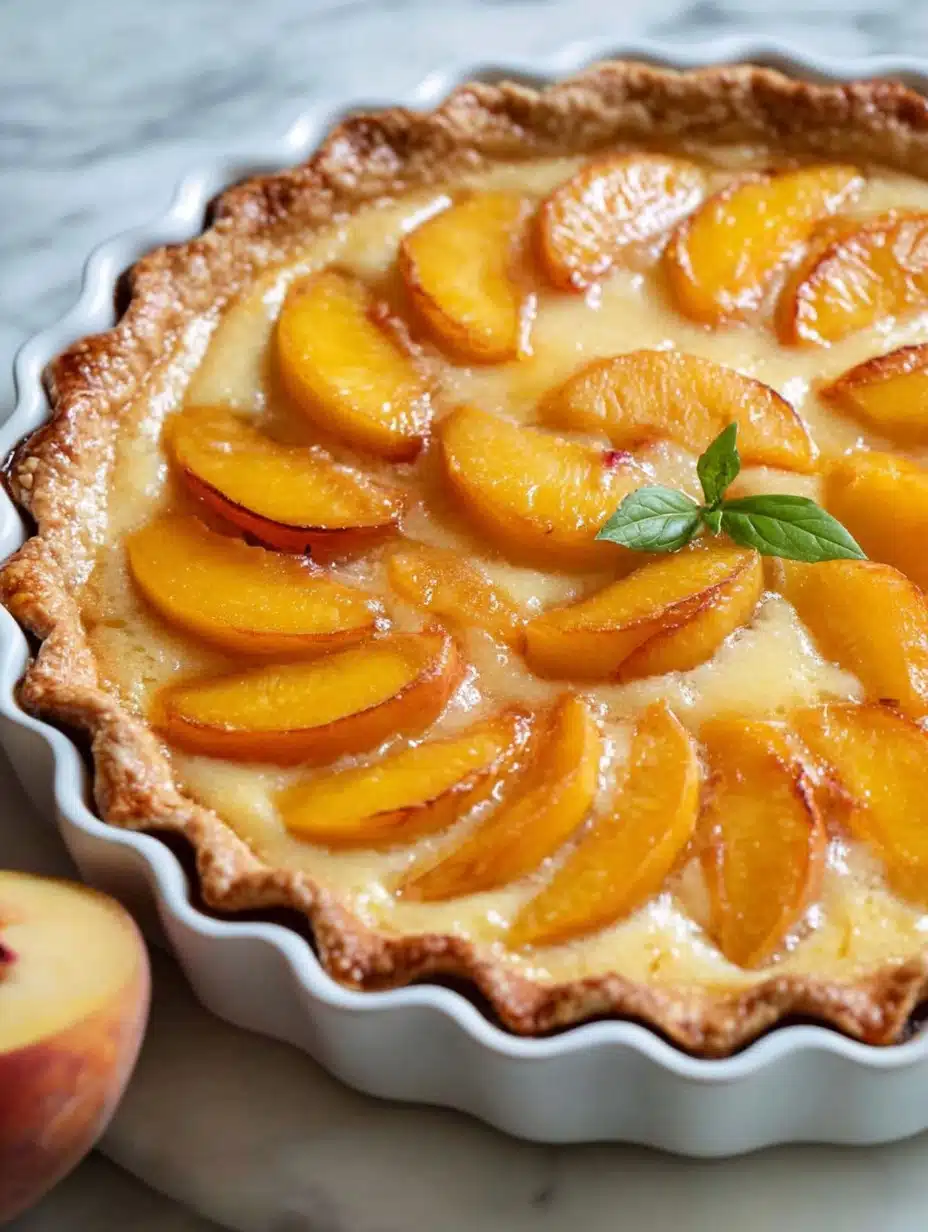
If You Don't Have The "Proper" Tools
If you don’t have a proper pie plate, honestly, I’ve used my deep-dish cake tin in a pinch. It just takes a few minutes longer to bake; check with a wobbly-jiggle test in the middle.
How to Store (If It Lasts That Long)
Just cover with foil or plastic wrap and keep in the fridge. It’s good for about 2 days. Though honestly, in my house it never lasts more than a day! Leftovers (if you’re lucky enough to have them) taste great cold. Actually, I think it’s even better the next day—though I’m often the only one to find out.
How We Serve It (Including Dessert for Breakfast)
Most of the time, we serve it slightly warm, with a dollop of softly whipped cream (sometimes straight out of the can if we’re in a rush—don’t tell my aunt). Sometimes I’ll sprinkle cinnamon or even a gentle dusting of powdered sugar over the top. And once, at my cousin’s request, we had a scoop of vanilla ice cream on the side. Highly recommend for those hot summer nights.
Pie-Making Lessons I’ve Learned (the Hard Way)
- Don’t rush the cooling step. I once tried serving it straight out the oven—the custard was soup, the crust fell apart, and, well, we all laughed, but lesson learned.
- Actually, I find it works better if you cut with a really sharp knife, or else the peaches will smoosh out the side. Not a disaster, just messy.
- Once forgot the salt; it’s a small thing, but makes a weirdly big difference in flavor. Don’t skip it!
FAQs From Real Life (or So I Claim)
- Can I use frozen peaches? Yep, just thaw and drain them first (otherwise you get a sad, watery custard—speaking from experience).
- Do I need to peel the peaches? If you like a really smooth filling, go for it. But honestly, I’ve left them on plenty of times and barely noticed, ‘specially with thin-skinned peaches.
- Can you make it ahead? 100%—I sometimes make it the night before company comes. It slices much neater after a night in the fridge anyway.
- No pie crust, what now? I’ve baked this crustless in a pinch—like a peach clafoutis! Just butter your dish well and maybe dust a little flour.
- Can I use other fruit? Sure thing—apricots are nice, and so are plums, but peach is still my top vote. Or mix a couple for variety, why not?
You wanna know something unrelated? I once tried putting too much whipped cream on top, and my dog somehow got a taste—from then on, he never took his eyes off the pie during family dinners. Just goes to show, everyone has their weak spot.
Ingredients
- 1 unbaked 9-inch pie crust (store-bought is fine honestly, though my grandmother always insisted on that red box crust mix—I use whatever’s handy)
- 4-5 ripe peaches, peeled and sliced (or about 4 cups—canned works great out of season, just drain well!)
- 3 large eggs
- ¾ cup granulated sugar (I swap in brown sugar sometimes for a bit of depth)
- 1 cup whole milk (I’ve even used half-and-half when I overestimated my milk supply)
- ¼ cup heavy cream (skip if you want a lighter custard, just add a splash more milk)
- 2 teaspoons vanilla extract (I ran out once and used almond—weird but not bad!)
- ¼ teaspoon salt
- 2 tablespoons all-purpose flour (or cornstarch, if you can’t find the flour—by the way, self-raising flour is a no-go… trust me)
- ½ teaspoon ground nutmeg (my personal favorite) or cinnamon (go wild if you prefer)
Instructions
-
1Preheat your oven to 375°F (190°C). If your oven preheats with that dramatic whoosh sound, it’s working. Place the pie crust in your pie plate, crimp the edges if you’re feeling artsy, or just leave it rustic (nobody's judging here).
-
2Layer those peach slices into the crust. I sometimes overlap them or chuck them in willy-nilly; just try to cover the bottom mostly evenly.
-
3In a medium bowl, whisk the eggs with the sugar. You want it kind of frothy. Add the milk, cream, vanilla, salt, flour, and nutmeg—whisk again until smooth. (This is where I usually taste-test the custard, though maybe you're more disciplined.)
-
4Pour the custard mix right over the peaches. It'll look a bit thin, but don’t worry. That’s normal. Tap the pie plate lightly on the counter so the custard settles and mingles with the peach slices.
-
5Pop it in the oven and bake for about 45-55 minutes. Keep an eye toward the end—it should be golden with a gentle jiggle in the center. If the edges start to brown too soon, tent some foil ring-style around just the crust (this step can feel fiddly, I know).
-
6Remove and cool at least an hour before slicing. Or don’t—sometimes we dig in while it’s still warm. But just know, it’ll be runny if you do. Your call!
Approximate Information for One Serving
Nutrition Disclaimers
Number of total servings shown is approximate. Actual number of servings will depend on your preferred portion sizes.
Nutritional values shown are general guidelines and reflect information for 1 serving using the ingredients listed, not including any optional ingredients. Actual macros may vary slightly depending on specific brands and types of ingredients used.
To determine the weight of one serving, prepare the recipe as instructed. Weigh the finished recipe, then divide the weight of the finished recipe (not including the weight of the container the food is in) by the desired number of servings. Result will be the weight of one serving.
Did you make this recipe?
Please consider Pinning it!