
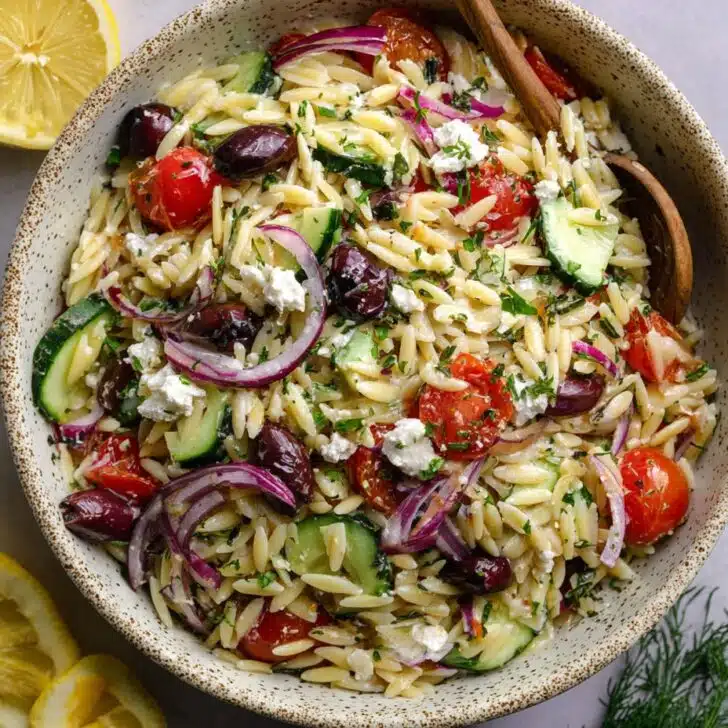
Let’s Talk About This “Greek Orzo Pasta Salad” Thing
You know those recipes that just refuse to leave your weekly meal rotation, even when you try to move on? Yeah, Greek Orzo Pasta Salad is mine. First made it on a whim (it was one of those what’s-left-in-the-fridge situations), and now my friends won’t shut up about it at every potluck. The first time, I spilled half the orzo on the floor—absolutely classic move. My dog was delighted. Anyway, enough about my kitchen skills, let’s get into this bowl full of summer.

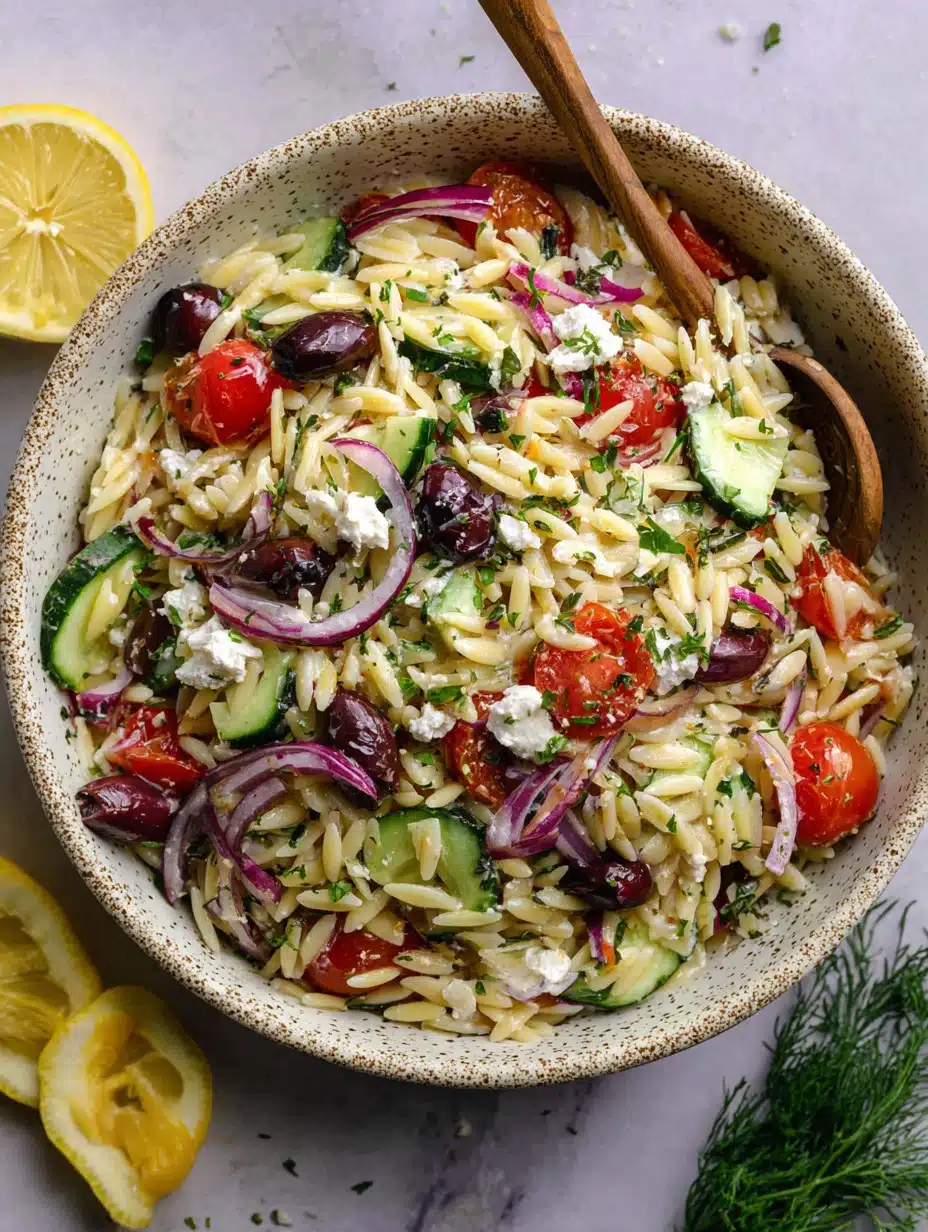
Why You’ll Love This Salad (Or, Why I Keep Making It)
- I make this when the weather convinces me I can live off refrigerated food alone.
- My family goes a bit wild for this at barbecues—my cousin actually once snuck the leftovers home in a Tupperware. (I was slightly offended, but also kinda proud.)
- This is my “fridge almost empty, but still want to eat like royalty” trick (the feta is non-negotiable, but I’ve tried skipping the olives a time or two... didn’t miss them much, but my mom noticed, naturally).
- I usually make double because, despite my best intentions, it disappears faster than chocolate at Easter.
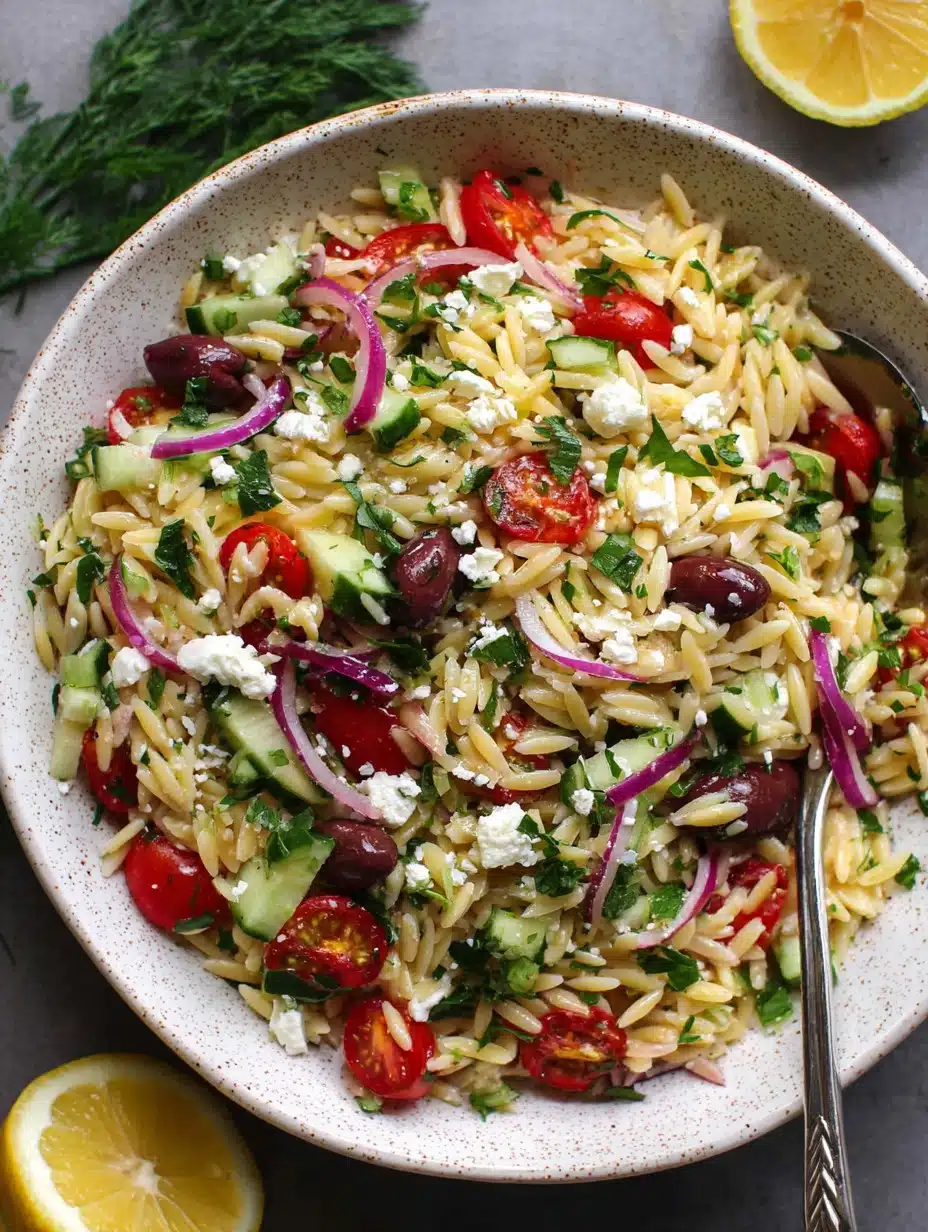
Here’s What to Grab (And Some Substitutions I’ve Tried)
- 1 cup orzo pasta (honestly, sometimes I just eyeball it—elbow macaroni will work in a pinch, but it’s not quite the same vibe)
- 1 large cucumber, diced (peeling optional—I rarely bother unless it looks especially tough)
- 1 cup cherry tomatoes, halved (I use grape tomatoes if that’s all I’ve got, or even the sad ones from the back of the fridge...)
- ½ cup Kalamata olives, pitted and sliced (green olives won’t ruin your life if you use them instead, but purists might frown)
- ⅓ cup red onion, finely chopped (I sometimes soak these in cold water to tame the bite, but usually I just throw them in because—time)
- ½ cup crumbled feta (my grandmother would only buy the kind in brine, but honestly, any feta does the trick)
- ¼ cup fresh parsley or dill, chopped (parsley is my go-to, but dill sings if you want more herbal oomph—occasionally I skip this if I’m feeling lazy)
- ¼ cup extra-virgin olive oil (or whatever is within reach—nobody’s judging, except maybe me)
- Juice of 1 large lemon (sometimes I just do a “good squeeze”—it’s not rocket science)
- 1 clove garlic, minced (powder works too, but I’m partial to the real deal)
- ½ teaspoon dried oregano (occasionally I double this because I live dangerously)
- Salt and pepper to taste (I probably use too much pepper, not sorry)
How To Make It (Follow or Improvise, Up to You)
- Boil a pot of salted water. Toss in the orzo and cook it per the box. I check for doneness around 8 minutes—al dente is the dream, but if you overshoot a bit, honestly, still delicious.
- Drain that orzo. Give it a quick rinse with cold water—this cools it off and keeps it from becoming one big pasta blob (I learned this the hard way and never looked back).
- While the orzo’s draining, chop your veggies like you’re avoiding tiny disasters. Into a big bowl goes cucumber, tomatoes, olives, onion, feta, and parsley (or dill, if you’re feeling wild).
- Plop the cooled orzo into the bowl. This is where I usually sneak a taste. It never tastes like much yet, by the way.
- In a small jar (or, honestly, a mug and a fork), whisk together olive oil, lemon juice, garlic, oregano, salt, and pepper until it’s all emulsified and vaguely exciting.
- Pour the dressing on the pasta and veggies, then toss—gently, unless you want feta confetti everywhere.
- Now, let it chill out in the fridge for at least 30 minutes. The flavors get to know each other (plus, you buy time to pretend you cleaned up).
- Give it another toss before serving and taste for seasoning—add more lemon, salt, or pepper if required. Sometimes I throw in extra herbs at the last second (because why not?).

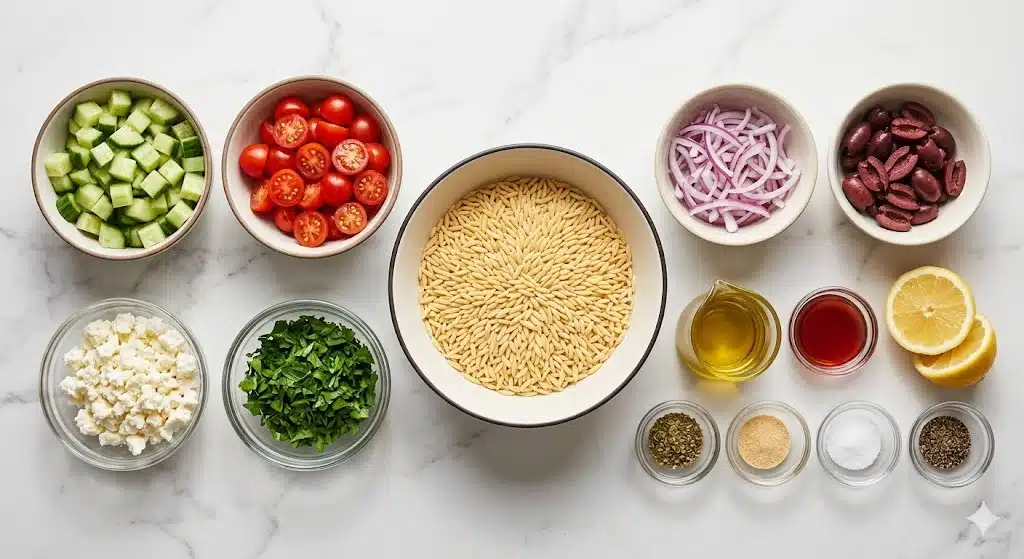
Notes From My Kitchen Experiments
- The chill time really does matter—learned this after one impatient batch.
- If you forget to rinse the orzo, don’t panic. It’ll just be a bit stickier. Still tasty.
- I once tried low-fat feta. Never again; it just didn’t deliver on flavor.
- Sometimes I forget the olives entirely and only notice halfway through eating. Nobody cares, weirdly.
What I’ve Tried (Variations, Not Always A Success)
- Adding diced grilled chicken—good if you want to bulk it up. Not so good the time I skipped marinade and it tasted like nothing.
- Swapping lemon for red wine vinegar... okay, just not as bright. Maybe skip that one.
- Chickpeas for extra protein—surprisingly great, unless you overdo it (which I absolutely did once, and it became more hummus than salad).

Tools I Usually Use (But Don’t Sweat It If You Don’t Have ‘Em)
- Large pot—if all you have is a medium one, just cook half the orzo at a time. That’s what I did in my shoebox London flat.
- Colander—strainer, sieve, or even just holding the lid and draining carefully works (be careful though—livin’ dangerously).
- Big mixing bowl—you can mix in the pasta pot in a pinch, but it feels a bit wild west.
- Jar or mug for dressing—you really just need something to mix it up.
How To Store It (If It Sticks Around That Long)
Keep in an airtight container in the fridge—lasts about 2–3 days. I think it tastes better on day two (though honestly, in my house it never lasts more than a day). If it looks a little dry when you pull it out, just splash a bit more olive oil and lemon over the top.
How I Like To Serve It (And a Random Family Tradition)
I love this straight outta the fridge, but it’s also brilliant as a sidekick next to anything off the grill. My kids like it packed in school lunches—minus the onions if they get their way. Sometimes I pile it up on a bed of baby greens and pretend I’m eating healthy. Oh, and for some reason, my uncle always insists on serving it with warm pita. Go figure.
Lessons Learned (My “Pro” Tips, For What It’s Worth)
- Don’t skimp on the lemon—once tried to save half for something else and the salad fell flat. Sour is good here.
- If you toss the salad too vigorously all at once, the feta kind of vanishes. Learned that the messy way; now I add some at the end instead.
- Tried rushing the cooling step, and the salad went weirdly mushy. Actually, I find it works better if you give the orzo space to breathe before combining.
Questions I Keep Getting (And Honest Answers)
- Can I make this gluten-free? Oh totally, just use gluten-free orzo (if you can find it). Quinoa works alright too, but it does change the mood a bit.
- Do I absolutely need feta? Nah, but... it’s just not the same without it. Goat cheese would work in a pinch. Cheddar is probably a bridge too far.
- Can I make it ahead? Yep, and I think it tastes better the next day—just give it a stir and maybe refresh the dressing.
- My salad got dry. What’s up? Orzo tends to suck up dressing. Just splash in more olive oil and lemon.
- How spicy is it? Not really spicy at all unless you go rogue and add chili. Maybe I should try that next time?!
- What’s a good drink with this? I’m not wine snob, but a cold Greek white (or a good lemonade, if that’s your style) hits the spot. Or just whatever’s in the fridge, who cares.
Ingredients
- 1 cup orzo pasta (honestly, sometimes I just eyeball it—elbow macaroni will work in a pinch, but it’s not quite the same vibe)
- 1 large cucumber, diced (peeling optional—I rarely bother unless it looks especially tough)
- 1 cup cherry tomatoes, halved (I use grape tomatoes if that’s all I’ve got, or even the sad ones from the back of the fridge...)
- ½ cup Kalamata olives, pitted and sliced (green olives won’t ruin your life if you use them instead, but purists might frown)
- ⅓ cup red onion, finely chopped (I sometimes soak these in cold water to tame the bite, but usually I just throw them in because—time)
- ½ cup crumbled feta (my grandmother would only buy the kind in brine, but honestly, any feta does the trick)
- ¼ cup fresh parsley or dill, chopped (parsley is my go-to, but dill sings if you want more herbal oomph—occasionally I skip this if I’m feeling lazy)
- ¼ cup extra-virgin olive oil (or whatever is within reach—nobody’s judging, except maybe me)
- Juice of 1 large lemon (sometimes I just do a “good squeeze”—it’s not rocket science)
- 1 clove garlic, minced (powder works too, but I’m partial to the real deal)
- ½ teaspoon dried oregano (occasionally I double this because I live dangerously)
- Salt and pepper to taste (I probably use too much pepper, not sorry)
Instructions
-
1Boil a pot of salted water. Toss in the orzo and cook it per the box. I check for doneness around 8 minutes—al dente is the dream, but if you overshoot a bit, honestly, still delicious.
-
2Drain that orzo. Give it a quick rinse with cold water—this cools it off and keeps it from becoming one big pasta blob (I learned this the hard way and never looked back).
-
3While the orzo’s draining, chop your veggies like you’re avoiding tiny disasters. Into a big bowl goes cucumber, tomatoes, olives, onion, feta, and parsley (or dill, if you’re feeling wild).
-
4Plop the cooled orzo into the bowl. This is where I usually sneak a taste. It never tastes like much yet, by the way.
-
5In a small jar (or, honestly, a mug and a fork), whisk together olive oil, lemon juice, garlic, oregano, salt, and pepper until it’s all emulsified and vaguely exciting.
-
6Pour the dressing on the pasta and veggies, then toss—gently, unless you want feta confetti everywhere.
-
7Now, let it chill out in the fridge for at least 30 minutes. The flavors get to know each other (plus, you buy time to pretend you cleaned up).
-
8Give it another toss before serving and taste for seasoning—add more lemon, salt, or pepper if required. Sometimes I throw in extra herbs at the last second (because why not?).
Approximate Information for One Serving
Nutrition Disclaimers
Number of total servings shown is approximate. Actual number of servings will depend on your preferred portion sizes.
Nutritional values shown are general guidelines and reflect information for 1 serving using the ingredients listed, not including any optional ingredients. Actual macros may vary slightly depending on specific brands and types of ingredients used.
To determine the weight of one serving, prepare the recipe as instructed. Weigh the finished recipe, then divide the weight of the finished recipe (not including the weight of the container the food is in) by the desired number of servings. Result will be the weight of one serving.
Did you make this recipe?
Please consider Pinning it!