Let Me Tell You How I Fell for Lotus Biscoff Cake
Okay, so imagine you're craving something a bit more exciting than your usual chocolate cake. That's pretty much how I stumbled into Lotus Biscoff Cake territory. I blame my friend Mira (she's got a sweet tooth that borders on scandalous)—she brought it over once, and I was seriously hooked. Not gonna lie: my first attempt looked a little like a demolition project, but it tasted so good it didn’t matter one iota. I still remember trying to hide the first slice from my brother; he found it anyway, scarfed it straight out of the tin. Classic. Plus, just the smell of this cake in the oven makes my kitchen feel like one of those cozy cafés in the city centre—right before a rainstorm. (Honestly, it’s a mood.)
Why You'll Love This Cake (Or At Least, Why I Keep Making It)
I pull out this recipe when I want to impress without, you know, actually working that hard. My family goes bonkers for it—like, I leave the cake on the counter and it shrinks before my eyes. (Pretty sure there are cake gremlins.) I love how it's got this warm, spicy thing going on; sort of festive, but not too cloying. Plus, even that one time I forgot the baking powder—it still tasted awesome; just a bit more like Biscoff fudge.
What You'll Need (And, You Know, What I'd Use If I Forgot Something)
- 200g Lotus Biscoff biscuits (sometimes, I swap for Speculoos but shhh… purists might riot)
- 140g plain flour (or self-raising, just skip the baking powder if you do)
- 1 teaspoon baking powder (though, as above, you can go rogue)
- Pinch of salt
- 150g unsalted butter, softened—my gran swears by Kerrygold, but I’m not fussy
- 120g soft brown sugar (I’ve scraped by with white sugar, in a pinch… but brown’s best)
- 3 medium eggs at room temp—if you forget, just warm them in a bowl of hot water for 5 min
- 80ml milk (whole, skimmed, whatever’s lurking in your fridge)
- 100g Lotus Biscoff spread (creamy is best, crunch’s a bit weird here)
- Extra Biscoff biscuits and spread for topping (and snacking—you’ll want some!)
How I Throw It Together—With Some Winging It
- Preheat your oven to 170°C (about 340°F) and line a 20cm cake tin with baking paper. Or just butter the heck out of it; either way works.
- Bash those Biscoff biscuits to crumbs (I usually stick ’em in a plastic bag and batter them with a rolling pin—free therapy!). Mix with flour, baking powder and salt. If you see little lumps, don’t stress, it’ll work out in the end.
- Cream butter and sugar with a mixer (or good old elbow grease). You want it pale and fluffy. Now, sneak a taste if you must—I always do.
- Crack in eggs one by one—mix well after each (if it splits, just add a spoonful of flour, it’ll fix itself—I promise).
- Stir in the Biscoff spread until it all looks glossy and smells, well, faintly like you should stop here and just eat it as is. But don’t.
- Fold in dry stuff gently with the milk. Honestly, if it looks a teensy bit runny, that’s better than dry. On second thought, don’t overmix—just barely combined is perfect.
- Pour into the tin. Level it if you want, or go rustic.
- Bake for 35-45 mins—mine’s usually done in 40, but every oven’s as moody as the weather. If a skewer comes out clean (or almost clean), you’re golden.
- Cool in the tin for 10 mins, then flop it out onto a rack. If you forget, like I always do, and it sticks a bit—just cover it with extra Biscoff spread. No one will notice.
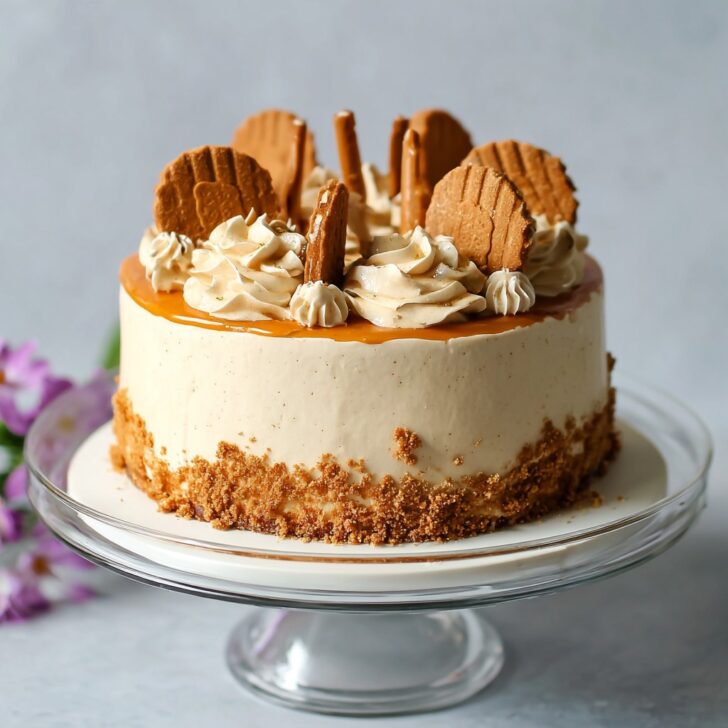
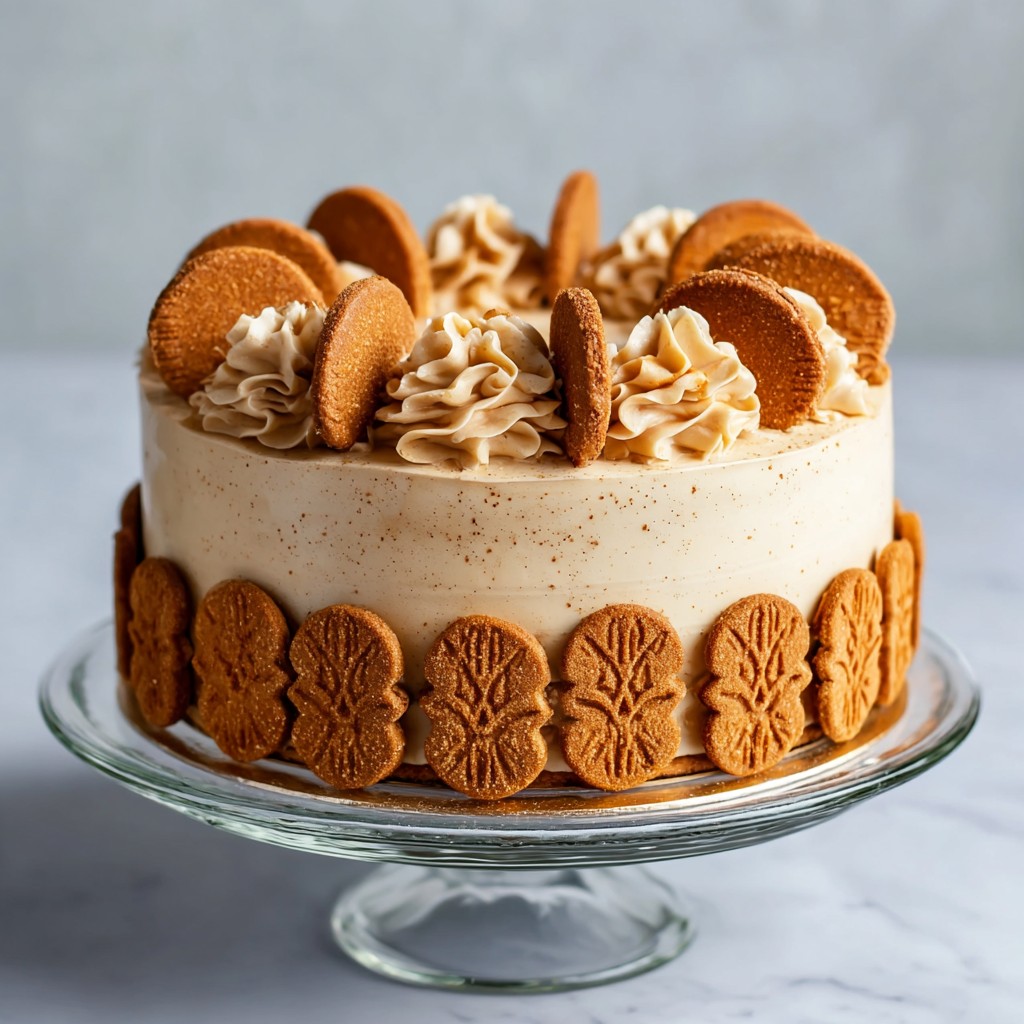
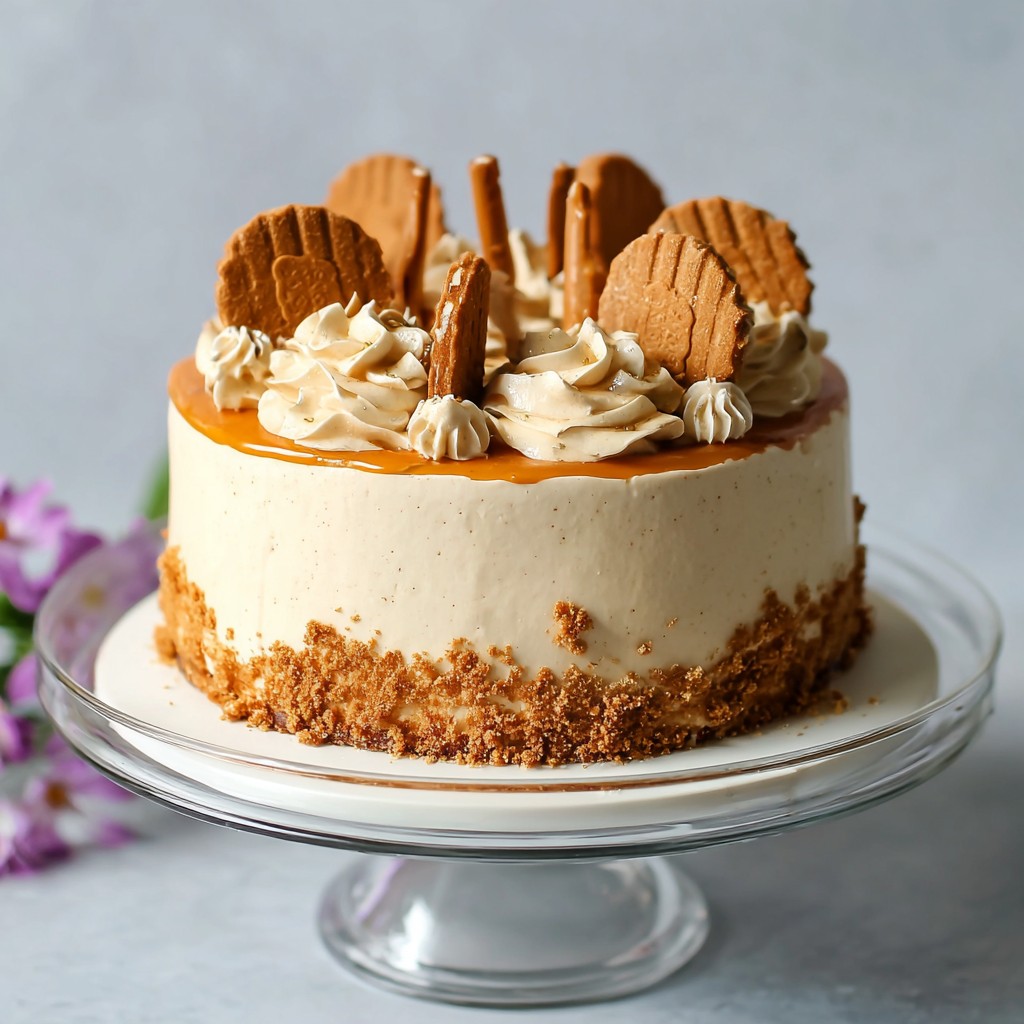
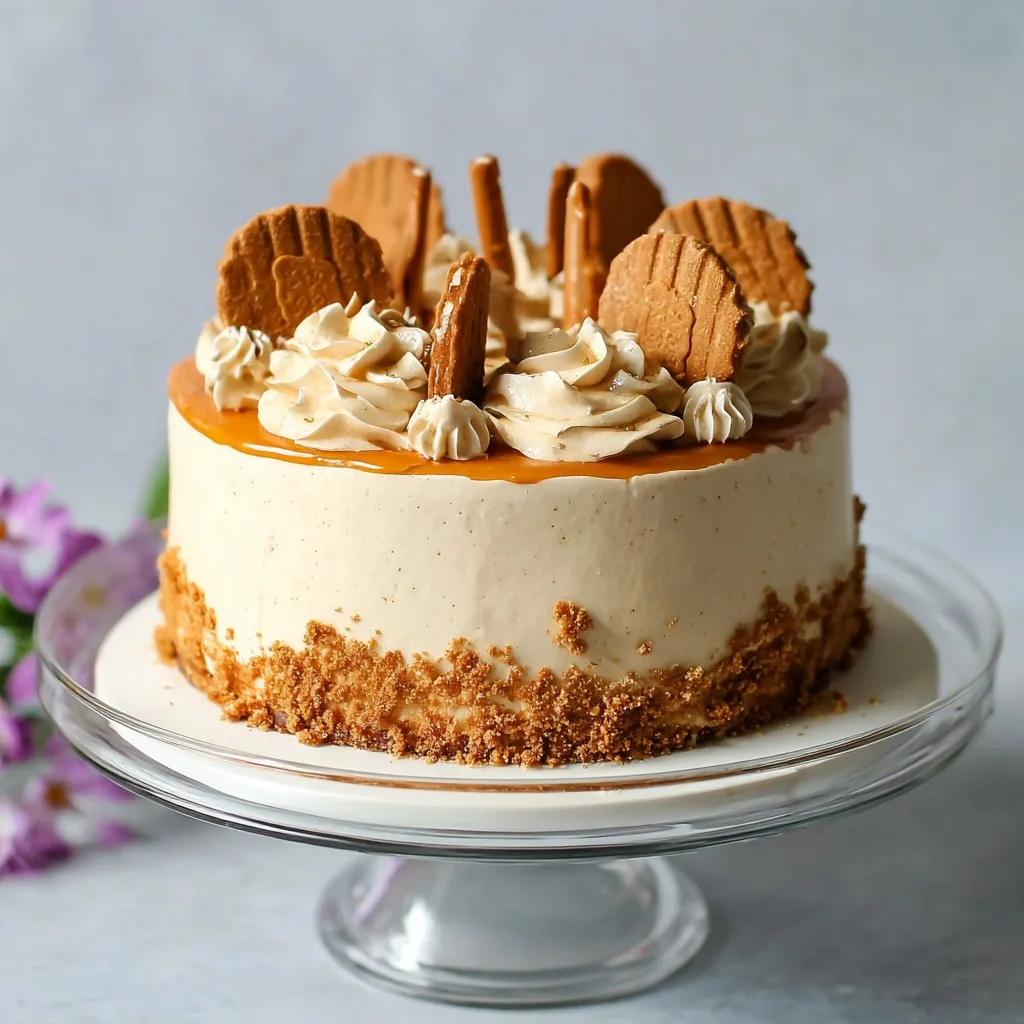
- Once cool, slather the top with more Biscoff spread (melt it slightly if it’s stubborn), sprinkle crushed biscuits, and don’t be shy: decorate with a few whole ones. Or, go wild!
Little Notes from a (Sometimes Forgetful) Baker
- I used to cool the cake in the tin fully, but it’d steam up and get a soggy bottom. Out early’s better!
- If your Biscoff spread’s solid (like mine on chilly mornings), zap it for just 10 seconds in the microwave.
- If your cake domes up like a volcano, just slice off the top—then, eat it. Baker’s perk.
How You Can Switch It Up (Some Better Than Others)
- I’ve folded in chopped nuts—walnuts were great. Pecans went a bit odd, too chewy for my liking.
- I tried adding chocolate chips once—tasted fine, but honestly, the Biscoff’s already sweet enough.
- Someone suggested a swirl of salted caramel. That’s on my list! Haven’t braved it yet.
- Gluten-free flour does work, but it comes out denser—keep expectations real.
Do You Need Fancy Tools? Eh, Not Really
A stand mixer’s quicker, but I’ve definitely made this with just a big bowl and a wooden spoon after my electric mixer died. If the crushed biscuits aren’t fine enough, just accept the crunch—it’s kinda nice, actually. If you don’t have baking paper, plenty of butter and a dust of flour usually does the trick.
How to Store It (If It Survives More Than a Day!)
I pop leftover slices in an airtight container—on the counter, they’re good for two days. If you hide it in the fridge, it keeps for about 4 days but honestly, it usually gets nicked before then in my house. Oh, and I think this tastes even better on the second day; the flavours have time to make friends.
What To Serve With Biscoff Cake? Here's What We Do
I love a fat dollop of whipped cream or vanilla ice cream (bonus points if it's slightly melty). My cousin likes it just plain with a super-strong coffee—she calls it 'breakfast cake,' which feels like cheating but who am I to judge? Sometimes, I crumble a bit over cinnamon porridge in the morning. Try it, seriously!
Pro Tips I Wish I’d Known (Read: Mistakes You Can Skip)
- Don’t try to microwave the whole cake to “speed up” cooling. Turns out, it just turns the middle stodgy (yeh, I did it once).
- If you rush the creaming stage, the cake’s texture gets weird—kinda dense. Actually, best to give that 5 minutes of honest work.
- Never frost the cake while it’s warm! The spread slides right off (sad, slightly hilarious mess).
FAQ (Some Real Questions I’ve Had Thrown At Me!)
- Can I make this without Biscoff spread?
- Technically, yes—you could swap in peanut butter but it’s a whole different vibe. Not everyone liked it at my house, but you do you.
- Can I double this recipe for a party?
- Absolutely! Just use a big enough tin and watch the bake time. It might take a tad longer. Test with a skewer—it’s better to check than scrape cake off the pan like I did.
- Could I freeze the cake?
- Yeah, but wrap it tight! Defrost before icing. I once forgot and ended up with Biscoff soup on top, not my finest moment.
- Which Biscoff biscuits are best?
- Honestly, I just grab whatever’s at the shop—own brands are fine in a pinch. If you’re curious about other brands, I sometimes check BBC Good Food’s biscuit reviews.
- How can I make this vegan?
- Swap in a plant-based margarine, dairy-free milk, and use an egg replacement. My pal tried this vegan Biscoff cake recipe once and said it worked a charm.
Quick aside? Once, my cat tried to eat a bit off my plate. No idea if that means this cake will become a classic, but I’m taking it as a sign. Anyway—happy baking, hope you love it as much as I do. If you have a wild experiment with this cake, let me know. (Or just tell me I’m not the only one who hides the best slices for myself.)
Ingredients
- 200g unsalted butter, room temperature
- 200g light brown sugar
- 4 large eggs
- 200g self-raising flour
- 100g Lotus Biscoff spread (plus extra for drizzling)
- 4 tablespoon milk
- 100g Lotus Biscoff biscuits, crushed
- 200g cream cheese
- 100g icing sugar
Instructions
-
1Preheat the oven to 180°C (350°F) and line two 8-inch cake tins with baking paper.
-
2In a large bowl, beat the butter and light brown sugar together until light and fluffy.
-
3Add the eggs one at a time, beating well after each addition, then mix in the Lotus Biscoff spread.
-
4Fold in the self-raising flour and milk until fully combined. Divide the batter evenly between the prepared tins.
-
5Bake for 35-40 minutes or until a skewer inserted into the center comes out clean. Cool completely.
-
6For the frosting, beat together the cream cheese, icing sugar, and 2 tablespoons Lotus Biscoff spread. Layer the cakes with the frosting, scatter with crushed biscuits, and drizzle extra Biscoff spread on top before serving.
Approximate Information for One Serving
Nutrition Disclaimers
Number of total servings shown is approximate. Actual number of servings will depend on your preferred portion sizes.
Nutritional values shown are general guidelines and reflect information for 1 serving using the ingredients listed, not including any optional ingredients. Actual macros may vary slightly depending on specific brands and types of ingredients used.
To determine the weight of one serving, prepare the recipe as instructed. Weigh the finished recipe, then divide the weight of the finished recipe (not including the weight of the container the food is in) by the desired number of servings. Result will be the weight of one serving.
Did you make this recipe?
Please consider Pinning it!!