

Let Me Tell You About My Sausage and Cabbage Stir Fry
I first started making sausage and cabbage stir fry on what I thought would be a disaster of a Tuesday—frig was nearly empty except for some wrinkly cabbage, a pack of sausages (the cheap kind!), and a lone carrot. I was so hungry, and honestly, those ingredients looked like they'd never play nice together. Spoiler: they totally did. The house still smelled like sausage the next morning, but I swear in the best way. This one's become the sort of "leave me alone, I’m cooking" recipe in our house—music on, no shoes, maybe even a bit of dancing between steps. If you know, you know.


Why You'll Love Making This (Trust Me!)
I make this sausage and cabbage stir fry when I don’t want to think too hard—a.k.a. most weeknights! My family goes mad for it (especially my partner, who keeps claiming he doesn’t like cabbage—right until his third helping, go figure). I’ve tried fancier versions, but honestly, nothing beats how quick and flexible it is. It’s one of those recipes that can be soothing after a long, rubbish day or just when you realize you forgot to shop for basically anything green. Oh and, bit of warning: cabbage always looks like too much until it mysteriously shrinks down to nothing in the pan. Every. Single. Time.
What You’ll Need—And What You Can Swap
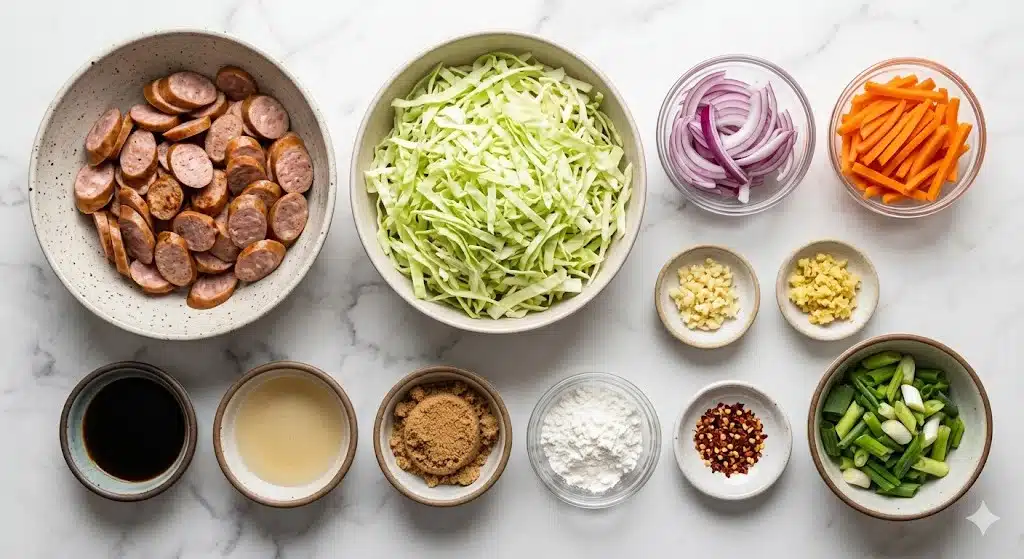
- 4 pork sausages (about 300g; I sometimes use chicken or even those plant-based ones when the fridge is looking sad—my grandma would yell at me, but honestly they all work)
- Half a large head of cabbage, shredded (roughly 4 packed cups—I’m not measuring this stuff, just use what you like)
- 1-2 carrots, sliced thin or grated (sometimes I skip if I’m out; adds nice color though)
- 1 medium onion, sliced (red, white, yellow… knock yourself out. I once used shallots and it was fine)
- 2-3 cloves garlic, minced (I occasionally use the pre-chopped stuff in a jar; little secret between us)
- 2 tablespoon soy sauce (or tamari if you’re gluten-free; my friend insists Worcestershire works too but I’m not convinced!)
- 1 tablespoon vegetable oil (olive oil if you’re feeling fancy, but regular works)
- Salt and black pepper to taste
- Optional: pinch of chili flakes (highly recommend for a kick), squeeze of lemon or dash of vinegar at the end
How To Actually Make This Stir Fry
- Prep your veggies first, because everything happens fast. Shred the cabbage, slice the onion and carrots, and try not to cry into the onions. Mince that garlic—unless you’re using the jar stuff (no judgment!).
- Cut your sausages. Take the sausage meat out of the casing (sometimes I just snip and squeeze, messy but works), then break it up into little chunks.
- Heat up a big frying pan or wok with the oil over medium-high. Nonstick is lovely, but I’ve done this in a beat-up skillet many times. Toss in the sausage pieces. Brown them up, breaking apart as you go. They don’t have to be perfect—it all gets stirred together anyhow. Sometimes they form mini meatballs and that’s honestly delicious.
- Add the onions and carrots right into the sizzling sausage—let them soften up for a few minutes, stirring here and there. This is where I usually sneak a taste (okay, maybe two).
- Toss in the garlic and give it all a quick stir—don’t let it burn, it's a crime against food.
- Now the cabbage joins the party. Add in handfuls if your pan is full like mine always seems to be. It'll shrink a bunch. Keep those veggies moving so nothing scorches. If it looks a bit odd or chaotic, you’re doing it right. After 5-ish minutes, cabbage should be tender but still a little crisp. Or softer. It’s your dinner.
- Pour in the soy sauce (plus chili flakes, salt, pepper, whatever you're feeling). Stir well so everything’s glossy and smells amazing. Take a taste—adjust seasoning if necessary. Sometimes I add a squeeze of lemon or a dash of vinegar for brightness here, but you absolutely don’t need to.
- Serve hot! (on its own, with rice, or even tucked into a crusty roll—I mean, why not?)

Stuff I Wish I’d Known (Notes!)
- Cabbage shrinks way more than you think. Really pack it in.
- Prepping everything before starting? It does make life easier, even if I usually don’t.
- If you overdo it with the soy sauce, a splash of water will mellow things out. Found that out the hard way.
- Tastes even better the next day... if there's any left, which is rare.
All the (Sometimes Weird) Variations I’ve Tried
So, here’s where I’ve played around. Swapped in kielbasa instead of plain pork sausage—result: more smoky, super tasty. Tried adding bell peppers—pretty good, but made it a bit sweet for me. Once, I added cabbage too early; it turned to mush. Wouldn’t recommend! Also, chickpeas in place of sausage... honestly, felt like something was missing, but go for it if you’re avoiding meat.


Kit You’ll Need (And Some McGyver Moves)
- Big frying pan or wok works best. Or any heavy skillet; seriously, I used a soup pot once.
- Sharp knife (dull knives + cabbage = pain, trust me)
- Chopping board
- Spatula or wooden spoon (unless you like using chopsticks, which… I respect)
How Long Does This Last In The Fridge?
If you have leftovers (not common in my house), this keeps pretty well in a sealed container in the fridge for up to 2 days. Reheat in the microwave or on the stove. But like I said, it usually vanishes the same night. Makes a mean breakfast, too, just saying.
Serving Ideas—Family Style & Personal Faves
I usually top bowls with a sprinkle of fresh herbs (parsley or spring onions look nice), but no stress if you forget. Sometimes we pile it onto sourdough toast or spoon it over fluffy rice. Once or twice, I went euro-style and served it with mustard on the side—pretty grand, actually. And something pickly (like gherkins) works wonders next to it.
Hard-Earned Pro Tips (You Can Learn From My Mistakes)
- Don’t skip the browning. I tried rushing this step (hungry kids, what can I say?) and the flavor was meh. Take a breath, let it get crispy.
- Too much cabbage? It never is. But if your pan overflows, just push things down as it cooks or do it in batches.
- If your sausages are super fatty, you might want to drain off excess grease before adding the veggies. I forgot once and it was... a bit much.
Questions Friends Have Actually Asked Me
- Can I use veggie sausage? Absolutely! I’ve tried with Beyond and Quorn—both were grand, though the texture’s a bit different.
- How small should I cut the cabbage? No need to fuss. I aim for ribbons, but have done chunky and finely shredded. It’ll melt down as it cooks.
- Is this spicy? Only if you add chili flakes (which I love, but my mum doesn’t, so I add them at the table sometimes).
- Can I freeze leftovers? Technically yes, but the cabbage goes a little sad and limp after thawing. Best eaten fresh or within a couple days.
- What's the best sausage? Oh, I get this one all the time. Anything you like! We once used a random herby one that was fantastic. Go wild.
Okay, if you got this far, you’re probably as hungry as I am. Happy stirring, friend!
Ingredients
- 4 pork sausages (about 300g; I sometimes use chicken or even those plant-based ones when the fridge is looking sad—my grandma would yell at me, but honestly they all work)
- Half a large head of cabbage, shredded (roughly 4 packed cups—I’m not measuring this stuff, just use what you like)
- 1-2 carrots, sliced thin or grated (sometimes I skip if I’m out; adds nice color though)
- 1 medium onion, sliced (red, white, yellow… knock yourself out. I once used shallots and it was fine)
- 2-3 cloves garlic, minced (I occasionally use the pre-chopped stuff in a jar; little secret between us)
- 2 tablespoon soy sauce (or tamari if you’re gluten-free; my friend insists Worcestershire works too but I’m not convinced!)
- 1 tablespoon vegetable oil (olive oil if you’re feeling fancy, but regular works)
- Salt and black pepper to taste
- Optional: pinch of chili flakes (highly recommend for a kick), squeeze of lemon or dash of vinegar at the end
Instructions
-
1Prep your veggies first, because everything happens fast. Shred the cabbage, slice the onion and carrots, and try not to cry into the onions. Mince that garlic—unless you’re using the jar stuff (no judgment!).
-
2Cut your sausages. Take the sausage meat out of the casing (sometimes I just snip and squeeze, messy but works), then break it up into little chunks.
-
3Heat up a big frying pan or wok with the oil over medium-high. Nonstick is lovely, but I’ve done this in a beat-up skillet many times. Toss in the sausage pieces. Brown them up, breaking apart as you go. They don’t have to be perfect—it all gets stirred together anyhow. Sometimes they form mini meatballs and that’s honestly delicious.
-
4Add the onions and carrots right into the sizzling sausage—let them soften up for a few minutes, stirring here and there. This is where I usually sneak a taste (okay, maybe two).
-
5Toss in the garlic and give it all a quick stir—don’t let it burn, it's a crime against food.
-
6Now the cabbage joins the party. Add in handfuls if your pan is full like mine always seems to be. It'll shrink a bunch. Keep those veggies moving so nothing scorches. If it looks a bit odd or chaotic, you’re doing it right. After 5-ish minutes, cabbage should be tender but still a little crisp. Or softer. It’s your dinner.
-
7Pour in the soy sauce (plus chili flakes, salt, pepper, whatever you're feeling). Stir well so everything’s glossy and smells amazing. Take a taste—adjust seasoning if necessary. Sometimes I add a squeeze of lemon or a dash of vinegar for brightness here, but you absolutely don’t need to.
-
8Serve hot! (on its own, with rice, or even tucked into a crusty roll—I mean, why not?)
Approximate Information for One Serving
Nutrition Disclaimers
Number of total servings shown is approximate. Actual number of servings will depend on your preferred portion sizes.
Nutritional values shown are general guidelines and reflect information for 1 serving using the ingredients listed, not including any optional ingredients. Actual macros may vary slightly depending on specific brands and types of ingredients used.
To determine the weight of one serving, prepare the recipe as instructed. Weigh the finished recipe, then divide the weight of the finished recipe (not including the weight of the container the food is in) by the desired number of servings. Result will be the weight of one serving.
Did you make this recipe?
Please consider Pinning it!