

My Plucky Quest to Conquer Filipino Pork Adobo
If you’ve never tried Filipino Pork Adobo before — well, friend, you are in for a treat. I still remember the first time I cooked this; it was supposed to be a "simple" weeknight thing, but somewhere between browning the pork and splashing in the vinegar, I managed to get sauce everywhere — on the stove, my shirt, possibly the cat. But the smell! It was like a big, warm culinary hug, and suddenly I forgot about the cleanup (sort of). Now it’s honestly my go-to whenever I need food to taste like love, or just need to prove, mostly to myself, that I can cook something utterly satisfying without losing my mind.


Why You'll Love This (If You're Like Me)
I make Filipino Pork Adobo when I want to remind people, hey, I can do more than just order-in! My family goes bananas for it, even if they complain it’s "too saucy" (as if that’s a thing). Sometimes I make it after a long day and, between you and me, the scent alone kind of fixes my mood. The quick part? Ha! Maybe if you skip marinating (but honestly, don’t). I used to get super annoyed with recipes that said, “just toss it all in.” Now, I take my time, maybe hum along to whatever’s on the radio, sneak a taste or two. If you only make one Filipino dish this year... make it this one. Except maybe don’t wear your favorite white shirt.
Here’s What You’ll Need (With a Few Workarounds)
- 2 lbs pork belly (or shoulder – I actually use shoulder if my butcher’s out of belly, it’s all good)
- ½ cup soy sauce (my grandma used Silver Swan brand, but honestly, any basic soy sauce does the trick)
- ½ cup vinegar (originally cane vinegar, but I’ve grabbed apple cider vinegar in a pinch and lived to tell about it)
- 6 cloves garlic, smashed (but I’ve used pre-minced stuff from a jar, let's not judge)
- 2-3 bay leaves (fresh if you’ve got them, dried if not—no drama)
- 1 tablespoon peppercorns (or just a hefty dash of ground black pepper if your pepper grinder is on strike)
- 1 cup water (or enough to almost cover the pork)
- 1 tablespoon brown sugar (now, this is optional, but I swear it rounds off the flavor)
- Optional: 2 potatoes, peeled and chunked — I add these sometimes for a "hearty meal" vibe
How I Make Filipino Pork Adobo (Give or Take a Step)
- Cut the pork into biggish chunks – think "fits-on-a-fork" size. Toss them in a bowl with the soy sauce and garlic. If you have time, marinate for 30 minutes or, if you’re in a mood, overnight. But real talk, sometimes I skip this and just keep moving.
- Heat a heavy pot (I love my Dutch oven, but I've used a deep frying pan too) over medium-high. Dunk the pork and everything else from the bowl in there. Brown the pork a bit. It won’t get super crispy, and that’s fine. (This is usually when I sneak a little taste off the spoon — perks of home cooking!)
- Pour in vinegar, DON'T STIR just yet — let it simmer for about two minutes. It’s one of those weird quirks; stirring too soon makes the pork tough, apparently. I learned that the hard way once, so trust me here.
- Now add water, bay leaves, peppercorns, and if you want it a bit sweet, the brown sugar. Give it all a gentle swirl, then cover and simmer over low heat until the pork’s super tender – usually about 45 minutes to an hour. Check now and then; if it looks dry, add a splash more water.
- If you’re adding potatoes, pop them in during the last 15-20 minutes or so, so they soak up some of that saucy goodness without totally falling apart (unless you like them that way, which is also fine).
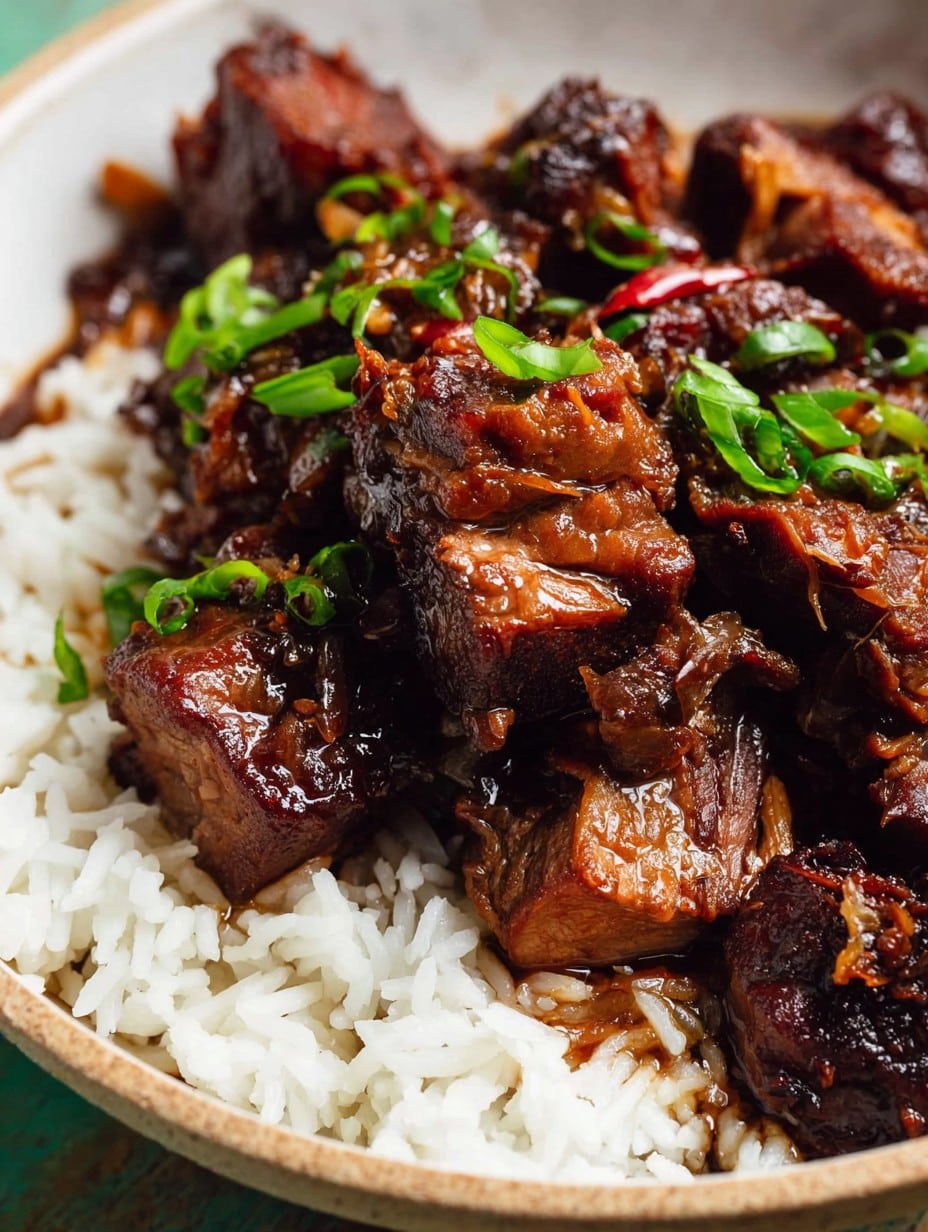
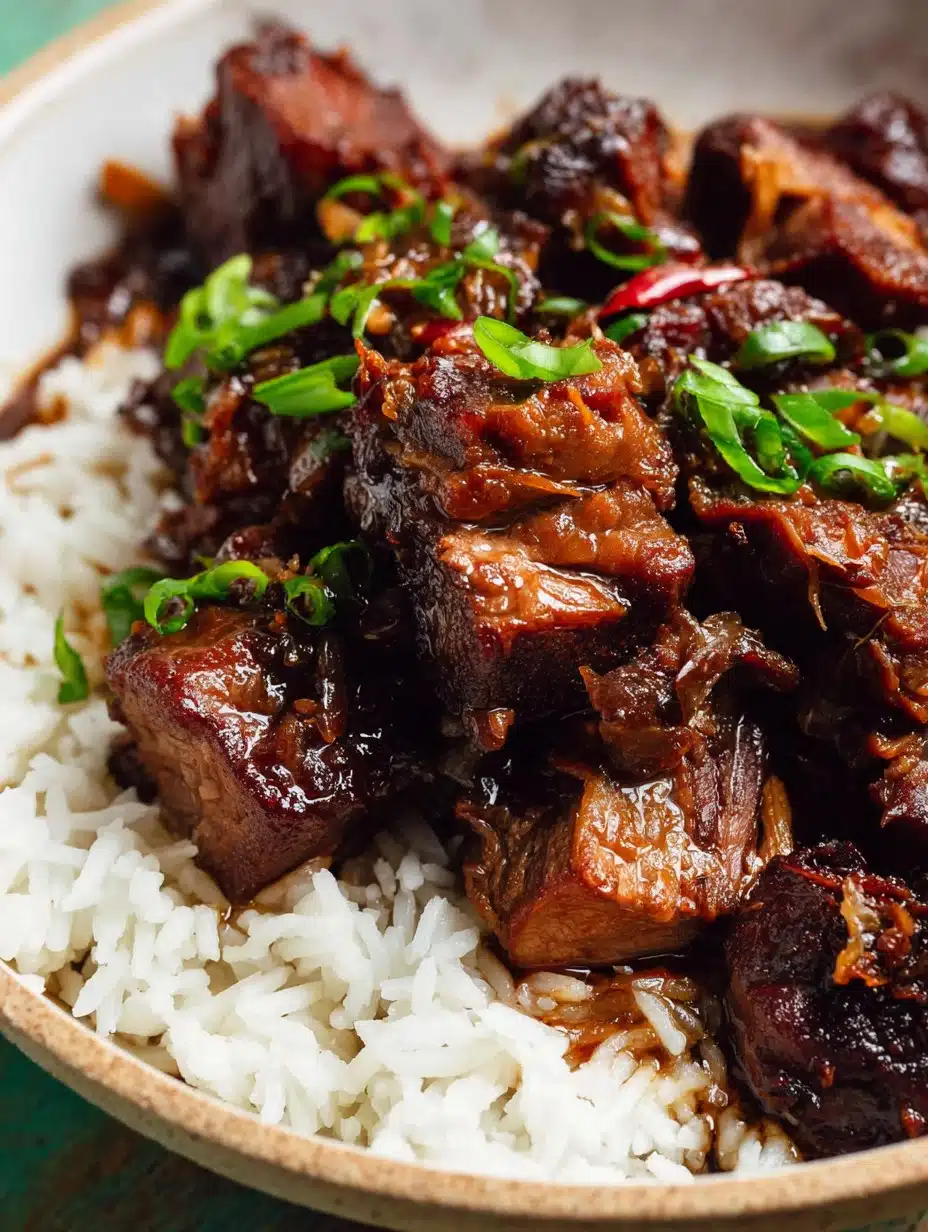
- Remove the lid and cook uncovered for another 10-15 min, let the sauce reduce to a glossy, kinda sticky situation. If it looks weird at this point, don’t panic — it comes together magically at the end.
- Fish out the bay leaves (or leave 'em in if you can't find them, they're mostly harmless) and serve over heaps of white rice.
Random Notes from My Kitchen
- If you use lean pork, it's not as forgiving — it can dry out. Pork belly is more forgiving, but also, you know, not exactly "light."
- I’ve thrown in a red chili or two when I’m feeling spicy. That said, my father-in-law claims that’s not "authentic." But what even is, right?
- The sauce thickens up more as it cools, so if it seems thin, just wait a bit — or, actually, cook it down a smidge more, your call.
The Weird Stuff I’ve Tried (And What Stuck!)
- Chicken instead of pork? Absolutely, it’s called Chicken Adobo then. Equally delish.
- Coconut milk added — this one time, because a friend told me to. Tasty, but a totally different animal; maybe not for purists.
- Once, I tried adding pineapple — let’s just say, not every experiment is a winner. The flavors just didn’t hang out well together.
- I’ve even tried pressure cooking it! Really speedy, but the flavors taste better if you let them wrestle together slowly. Just my two pesos.
Equipment I Actually Use (Plus a Few Hacks)
I love my Dutch oven, but I’ve made this in a big fry pan with a lid, even a slow cooker once (though you can’t brown the pork first, which I sorta miss). No bay leaves? I’ve literally used oregano once and nobody noticed. If you don’t have a garlic press, just smash with a knife — or, actually, the side of the salt grinder works in a pinch. Use what you got!
Will It Last? Well... Kinda Depends
Technically, you can store Filipino Pork Adobo in the fridge for up to 4 days, and it freezes decent too. But honestly, in my house it never lasts more than a day, so most of my "storage" is me hiding the last cup for lunch tomorrow. (Confession: I think it tastes even better the next day, when the flavors get all cozy together.)
How I Serve It to the Hungry Masses (a.k.a. Family)
White rice. Mountains of the stuff. Sometimes I make garlic fried rice if there’s extra time! My cousin swears by serving it with atchara (pickled papaya). I don’t usually bother unless it’s a special dinner, but hey, you do you. Oh — and the sauce, don’t skimp! Pour it right over the rice so it sinks in.
The "Don’t Do What I Did" List (aka My Pro Tips)
- I once tried to rush the simmering — turned out all tough and sad. Just keep it gentle and slow, like letting your brain wander on a lazy Sunday.
- Adding salt before tasting: rookie move. Soy sauce is salty, so don’t get heavy-handed!
- If you skip garlic, that’s fine, just... don’t tell me, because I might shed a tear. Joking (sort of).
Honestly, Here Are Some FAQs (Real Questions I Get Asked!)
- Can I use chicken instead of pork? Yes — just swap the pork for chicken thighs or drumsticks. Watch the cooking time, chicken cooks faster!
- What kind of vinegar is best? Traditional is cane vinegar, but I’ve honestly used regular white vinegar, sometimes apple cider. Each brings its own flavor, but they all work in a pinch.
- Do I have to marinate the pork? Not really — sometimes I do, sometimes I just toss and go. Maybe it’s a little deeper in flavor if you marinate, but not a dealbreaker.
- Can I make this in advance? Actually, I think it tastes better when reheated the next day. Just saying.
- Why is my pork tough? Probably cooked it on too high a heat or didn’t let it simmer long enough. Or, you know, the pork just had a bad day. Try giving it more time and a splash more water.
One time, mid-cooking, I realized I didn’t even check if we had rice, so I had to run next door and barter for a cup with my neighbor (thanks, Jean!). Moral of the story: always check your rice stash before you start, unless you like living dangerously.
Ingredients
- 2 pounds pork belly or pork shoulder, cut into 2-inch cubes
- ½ cup soy sauce
- ⅓ cup cane vinegar or white vinegar
- 6 cloves garlic, peeled and crushed
- 2 bay leaves
- 1 teaspoon whole black peppercorns
- 1 medium onion, sliced
- 1 tablespoon cooking oil
- 1 cup water
- Salt and sugar to taste
Instructions
-
1Heat the cooking oil in a large pot over medium heat. Add the garlic and onion. Sauté until fragrant and onion becomes translucent.
-
2Add the pork pieces and cook until lightly browned on all sides.
-
3Pour in the soy sauce and vinegar. Add bay leaves and black peppercorns. Do not stir. Let the mixture come to a boil.
-
4Add water. Lower the heat, cover, and simmer for 45-60 minutes or until pork is tender and sauce has reduced to your preferred consistency.
-
5Season with salt and a pinch of sugar to balance the flavors. Serve hot with steamed rice.
Approximate Information for One Serving
Nutrition Disclaimers
Number of total servings shown is approximate. Actual number of servings will depend on your preferred portion sizes.
Nutritional values shown are general guidelines and reflect information for 1 serving using the ingredients listed, not including any optional ingredients. Actual macros may vary slightly depending on specific brands and types of ingredients used.
To determine the weight of one serving, prepare the recipe as instructed. Weigh the finished recipe, then divide the weight of the finished recipe (not including the weight of the container the food is in) by the desired number of servings. Result will be the weight of one serving.
Did you make this recipe?
Please consider Pinning it!!