
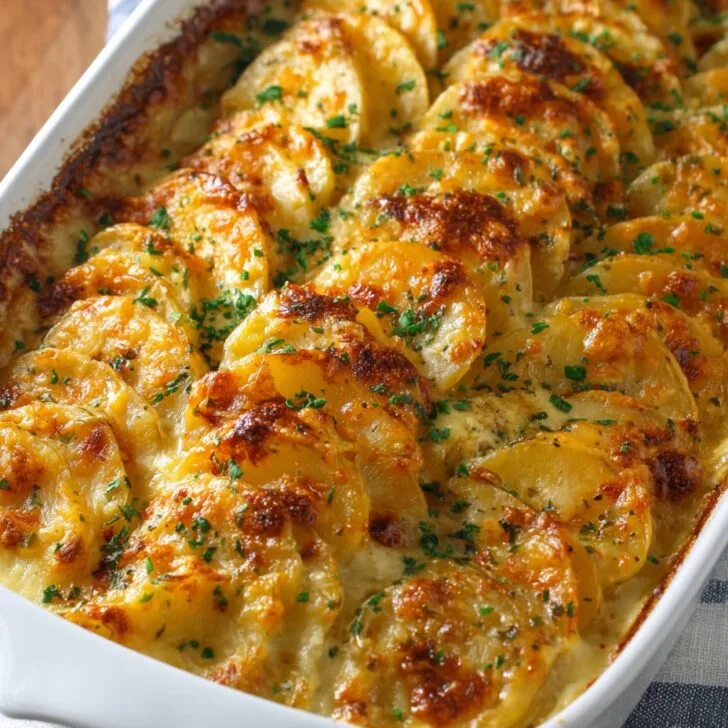
Let Me Tell You About These Cheesy Scalloped Potatoes...
Alright, picture this: It’s a rainy Sunday, football is trying (and failing) to hold anyone’s attention, and suddenly everybody’s sniffing around the kitchen like hungry puppies. That’s usually when I haul out this Cheesy Scalloped Potatoes Recipe. Seriously, it’s like edible nostalgia—reminds me of my first apartment, making a mess, trying (and sorta failing) to impress my then-boyfriend, who’s now my always-hungry husband. If potatoes could talk, well, mine would probably complain about my taste tests, honestly. Hope you don’t mind a few breadcrumbs in your cheese, ha!

Why You'll Absolutely Dig This
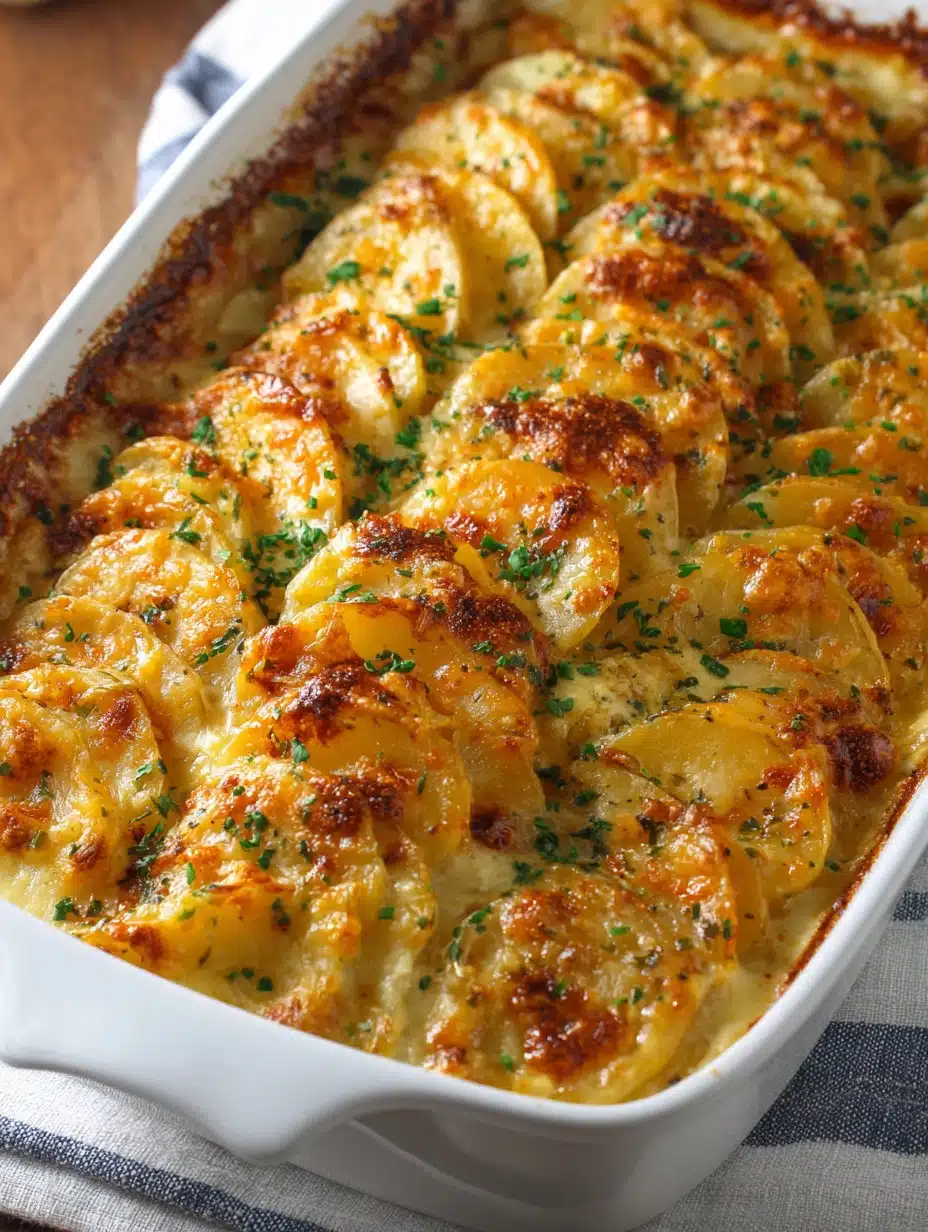
I make this when the weather stinks, or if I forgot to buy anything fresh. My family goes crazy for this because—let’s be real—it’s cheesy and potatoey and warm, and did I mention cheese? (And zero judgement if you scrape the crispy bits straight off the side of the pan. That’s basically tradition anyway.) Sometimes the top goes a little too brown, or the sauce suddenly looks weird halfway through; it always pulls through in the end. Heck, even my picky niece forgets she “doesn’t like potatoes” and sneaks back for thirds.
Grab Your Ingredients (Substitutions Welcomed!)
- About 2 lbs (900g) potatoes (Yukon Gold work great, but I’ve honestly grabbed Russets in a pinch—don’t overthink it)
- 2 cups shredded sharp cheddar (my grandma was adamant about the Cracker Barrel brand, but any cheese you like is fair game)
- 1 small onion, finely diced
- 2 cups milk (if I’m out of milk, half-and-half or even evaporated milk have done the trick—just not soy milk, that was a disaster)
- 3 tablespoons butter
- ¼ cup all-purpose flour
- 2 cloves garlic, minced (I once tried garlic powder and… let’s say I prefer the real stuff)
- A big pinch of salt (I rarely measure, just go by the heart)
- Some black pepper
- Optional: A dash of nutmeg, paprika, or chives on top (entirely up to your mood)
Let's Get Cooking! (Some Steps May Be More Casual Than Others…)
- Preheat oven to about 375°F (190°C). Grab whatever casserole dish you have—I use a beat-up enamel one my mum gave me, but honestly anything oven-proof will do.
- Peel (or don’t—skins = rustic charm) and slice your potatoes about ⅛-inch thick. If you have a mandoline, neat. If not, just do your best—it’ll taste good regardless.
- Melt the butter over medium heat in a saucepan. Throw in the diced onion and let it soften. Garlic joins the party next. If it sticks a bit, that’s flavor, don’t panic.
- Whisk in the flour so it looks a bit like wallpaper paste (just trust me, it’ll work out). Keep stirring about a minute so it doesn’t taste floury later on.
- Start pouring in the milk slooowly, constantly whisking, so it gets smooth. If you dump it in and lumps happen, just whisk harder. Add the salt, pepper, and a tiny grating of nutmeg if you’re so inclined.
- Let the sauce bubble till it thickens. Take it off the heat, chuck in most of your cheese (save a handful for topping). Stir until melty and smooth. This is where I usually sneak a spoonful—don’t judge.
- Layer about a third of your potatoes in the dish. Pour on a third of the cheese sauce. Repeat in layers, ends with a splash more sauce and the last bit of cheese on top.
- Pop in the oven (uncovered)—it usually takes at least 50 minutes, sometimes up to 70. You want bubbly, golden, and a fork to slide in easy. (If the top’s getting over-enthusiastic, lay a bit of foil over it!)
- Let it sit 10-15 min before serving, if you can resist. Hot cheese is like lava; don’t learn the hard way!”
Random Notes of Wisdom (or Just What I’ve Messed Up)
- If you use milk straight form the fridge, your sauce might take ages to thicken. Let it warm up a bit first—trust me.
- Sometimes I forget to slice the potatoes thin and it’s a little underdone. Stab a potato after 50 min to check!
- Actually, I find the leftovers taste even better the next day (if there’s any left, which in my house is rare).
Variations—Or My Experiments, Good and Weird
- Once I chopped in some bacon between layers. Disappeared fast!
- I tried with sweet potatoes once; it was... interesting, but not exactly what you hanker for when craving classic cheesy potatoes.
- Add chopped fresh herbs for a fancy touch—I like thyme, but parsley goes if that’s all you’ve got.
- Want it creamier? Stir in a good glug of cream alongside the milk.

What You’ll Need (and My Lazy Workarounds)
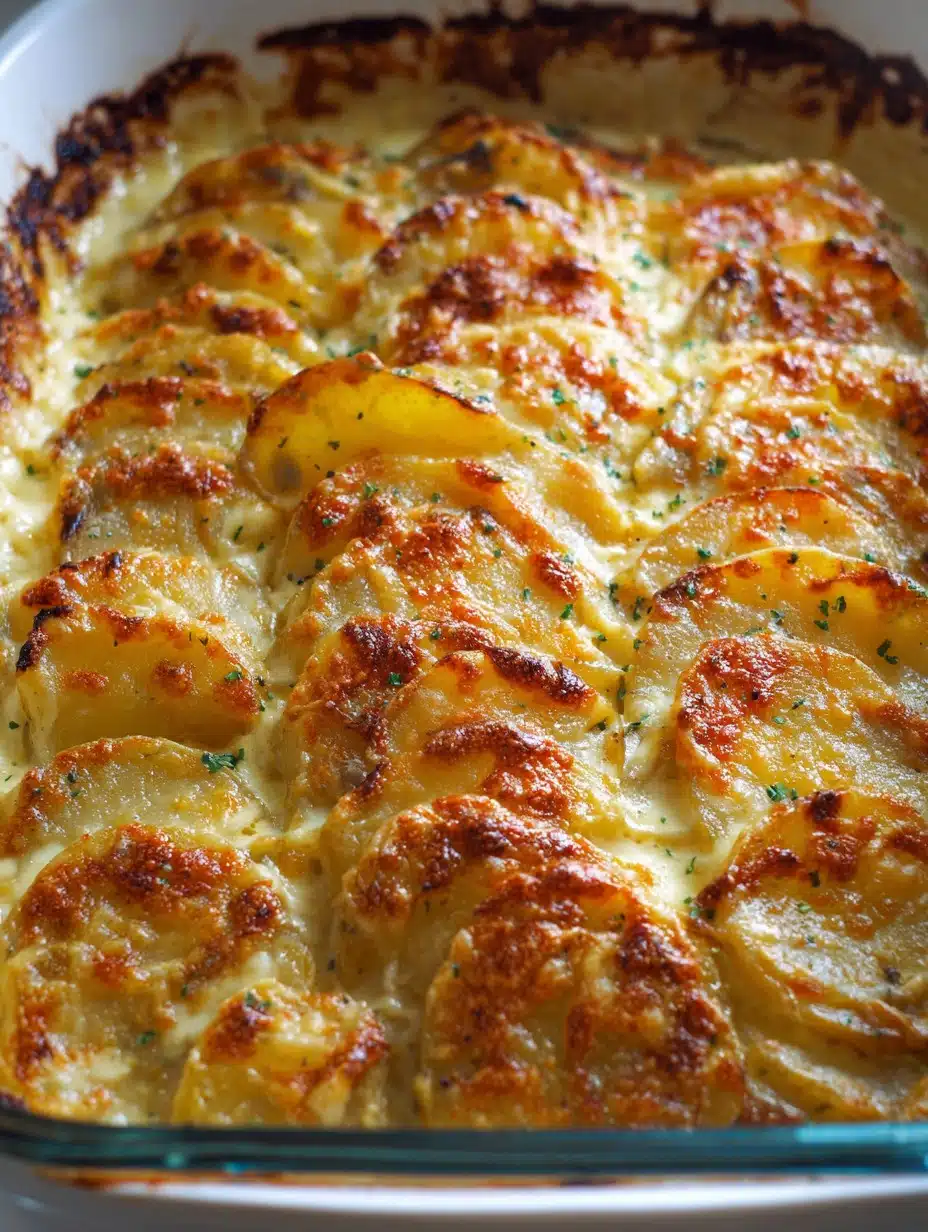
- Casserole or baking dish (I’ve doubled up roasting pans before; nobody noticed)
- Saucepan
- Whisk (forks work in a pinch—just be diligent!)
- Sharp knife or mandoline for slicing (careful; those things are sneaky sharp)
Leftovers and Storage (But Good Luck With That…)
If you somehow restrain yourself, store extra in an airtight box in the fridge; it reheats decently in the oven or microwave (add a splash of milk if it seems dry). But honestly, can’t remember a time it lasted more than a day!
How I Like to Serve It
I love it with roast chicken or even just a bright salad and crusty bread. My cousin claims it’s a holiday only thing, but I’ll sneak it in for weeknight dinner on a whim. Sometimes we just eat it by itself in front of the telly. No shame.
Things I’ve Learned the Hard Way (Pro Tips From My Trials)
- Rushing the sauce is a rookie mistake—I once poured milk too fast and got the dreaded lumps that never went away. Take a breath; slow wins.
- Don’t stack your potato slices too thick. Or things turn into a potato brick, and not in a good way.
- Add more cheese than you think. No one’s ever been mad about extra cheese. (If they are, well, more for you!)
Questions I Get All the Time (Seriously, Folks…)
- Can I make this ahead? You bet—just assemble (stop before baking), chill, then bake when ready (maybe add 10 min to the time).
- What if I’m out of cheddar? Mix in whatever you’ve got! I tried Gruyère once, and wow, no regrets at all.
- Why is my sauce lumpy? Honestly, I’d say it’s usually because the milk went in too quick or wasn’t whisked enough; just keep going, it’ll smooth out mostly.
- Can I freeze it? Technically, yes, but the texture gets a bit wonky (kinda grainy). I’d recommend eating it fresh, or next day at most.
- How can I make it vegetarian? It already is, unless you throw in bacon or some sneaky ham (which, yeah, I’ve done).
By the way, I once tried to put truffle oil in because my neighbor said it was “the thing”—and, well, let’s just say I’ll stick with good old cheddar for now. Anyway, let me know how yours turns out—unless it’s to tell me you got sauce everywhere, in which case, welcome to the club!
Ingredients
- 2 lbs russet potatoes, peeled and thinly sliced
- 2 cups shredded cheddar cheese
- 2 cups whole milk
- 3 tablespoon unsalted butter
- 3 tablespoon all-purpose flour
- 1 medium onion, finely chopped
- 2 cloves garlic, minced
- 1 teaspoon salt
- ½ teaspoon black pepper
- ¼ teaspoon paprika
Instructions
-
1Preheat the oven to 375°F (190°C) and grease a 9x13-inch baking dish.
-
2Melt butter in a medium saucepan over medium heat. Add chopped onion and garlic, and sauté until softened.
-
3Stir in flour and cook for 1 minute, then gradually whisk in the milk. Cook, stirring constantly, until the sauce thickens.
-
4Remove from heat and add 1 ½ cups shredded cheddar cheese, salt, pepper, and paprika. Stir until the cheese is melted and the sauce is smooth.
-
5Layer half of the sliced potatoes in the prepared baking dish. Pour half of the cheese sauce over the potatoes. Repeat with the remaining potatoes and sauce.
-
6Sprinkle the reserved ½ cup cheddar cheese on top. Cover with foil and bake for 45 minutes. Remove foil and bake for an additional 15 minutes until golden and bubbly.
Approximate Information for One Serving
Nutrition Disclaimers
Number of total servings shown is approximate. Actual number of servings will depend on your preferred portion sizes.
Nutritional values shown are general guidelines and reflect information for 1 serving using the ingredients listed, not including any optional ingredients. Actual macros may vary slightly depending on specific brands and types of ingredients used.
To determine the weight of one serving, prepare the recipe as instructed. Weigh the finished recipe, then divide the weight of the finished recipe (not including the weight of the container the food is in) by the desired number of servings. Result will be the weight of one serving.
Did you make this recipe?
Please consider Pinning it!!